As an Amazon Associate I earn from qualifying purchases. This post contains affiliate links. If you buy through them we may earn a commission at no extra cost to you.
Product prices and availability are accurate as of the date and time indicated and are subject to change. Any price and availability information displayed on Amazon at the time of purchase will apply to the purchase of this product. Certain content that appears on this site comes from Amazon. This content is provided "as is" and is subject to change or removal at any time.
Most of what makes flying with a baby hard is not the flight. It is the twenty minutes at security, the walk through the terminal carrying more than you can carry, and one rule nobody told you about until you were standing at the gate.
This is the short version of everything that matters, with the detail split into separate guides where it genuinely needs it.
Decide first: lap infant, or their own seat?
A child under two can fly as a lap infant — held, no seat of their own. On most US domestic flights that is free; internationally it usually costs a percentage of the adult fare plus taxes, so “free” is a domestic phrase.
The alternative is buying them a seat and putting them in a car seat. It costs a fare, and the FAA recommends it: their guidance is that the safest place for a child under two is in an approved child restraint, not on an adult’s lap. Turbulence is the reason, and it is unannounced by definition.
That is the real decision, and it is a money-against-safety one that only you can make. What the rest of this guide can do is make sure that whichever you choose, nothing surprises you. If you are leaning toward the car seat, the rules on which seats are actually allowed on a plane is the one to read next, because not every car seat qualifies and boosters are specifically excluded.
The first decision
Lap infant, or their own seat?
Lap infant
Own seat + car seat
Cost
Usually free on US domestic; a percentage of the adult fare plus taxes internationally
A full fare, every leg
What the FAA says
Permitted, but not what they recommend
Recommended — an approved restraint is the safest place for a child under two
Turbulence
You are the restraint, and it is unannounced by definition
Child stays secured
Somewhere to put them down
Only a bassinet, if you get one
Yes — the seat is theirs
Your arms
Full, for the whole flight
Free
The five things people find out too late
- Not every car seat is approved for aircraft. It needs specific certification wording on its label, and a booster does not count. Covered in full here.
- Baby liquids are exempt from the 100ml rule — formula, breast milk and baby food travel in reasonable quantities, but they must be declared and screened separately. The liquid rules.
- Bassinets are not bookable like a seat. They are limited, aircraft-dependent and requested rather than reserved. How they actually work.
- Gate-checked strollers get damaged, and the compensation is not what you assume. What to expect.
- Ear pain is a descent problem, not a takeoff one, which changes when you feed. What helps.
Timeline
Your airport, in the order it happens
- 1Check-inReconfirm a bassinet if you requested one. Ask where a gate-checked stroller will be returned — door or carousel.
- 2SecurityBaby liquids out of the bag and declared before screening starts. Expect extra time here rather than anywhere else.
- 3The gateAsk for a gate-check tag when you arrive, not at boarding. Photograph the stroller folded.
- 4BoardingHand the stroller over at the aircraft door. Car seat goes in a window seat you have already booked.
- 5DescentThe part that matters for ears. Save a feed for the last stretch rather than settling them an hour out.
The gear, ranked by how much difference it makes
1. A carrier — the highest-value item you will pack
Hands are the scarce resource in an airport. A carrier gives you both of them back while keeping the baby on you through security, boarding and the aisle, and it is the single piece of kit most likely to change how the day goes.
Soft structured carriers suit longer wears and bigger babies; a wrap or ring sling packs smaller and is quicker for a newborn.
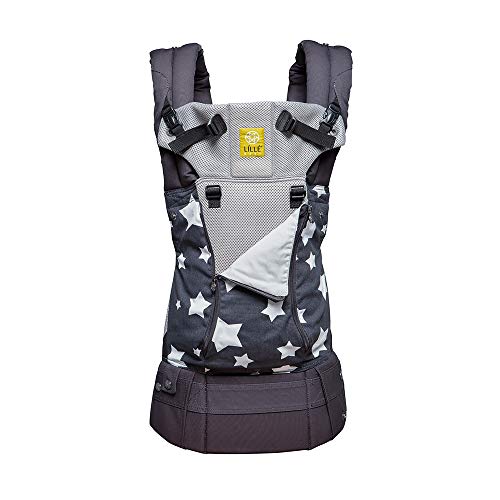
- Six Positions: The LÍLLÉbaby Complete baby carrier features 6 ergonomic carry styles for 360-degree babywearing including front, backpack and hip styles.
- Ready for All Seasons: Zip down front panel reveals breathable mesh for extra airflow on warm days.
- Newborn to Toddler: Transformational carrier seat can be folded small for newborns and infants and expanded to a wider setting as your child grows.
Paid link

- Comfortable waist belt and back support provide excellent weight distribution for maximum carrying comfort
- Two safe and ergonomic carrying positions: baby facing-in and baby facing-out
- Designed to safely grow with your baby from newborn to 15 months – no infant insert needed. Minimum 8 pounds/21 inches and Maximum 26 pounds
Paid link
Skip the carrier only if you are travelling with another adult per child and are checking everything. Otherwise it earns its space. More options in the soft structured carrier guide and the sling guide.
2. A car seat, if you have bought a seat
Two separate jobs here, and people conflate them: the seat that is approved for the aircraft, and the seat you need at the destination. Sometimes one item does both. Often the narrow, light one is right for the plane and wrong for the car you are hiring.

- The easiest infant car seat to install
- 5-point harness adjusts with one hand
- Full body inserts for newborns 4-11 pound to protect smaller babies
Paid link
Our original pick has been discontinued by Amazon. This is the closest current match we could find.

- Includes Comfort Travel Kit featuring complimentary colored head support pillow, comfort cushion and 2 XL cup holders.
- 10 Years One Car Seat – from Birth to Booster (5 – 120 lb) it's all you will need. Grows with your child, ultimate protection on every road trip. 4 modes in 1 seat!
- Rear Facing for Longer – lovingly engineered to keep your child rear-facing up to 50 lb.
$169.99 In Stock
Paid link · price checked October 11, 2026 09:15
Width is the spec that matters on a plane — an economy seat is narrower than a car seat position. Narrow convertibles have a following among frequent-flying parents for exactly this reason.
3. A diaper bag that works as a backpack
Shoulder bags slide off while you are folding a stroller one-handed. A backpack does not, and it counts as your personal item on most carriers.
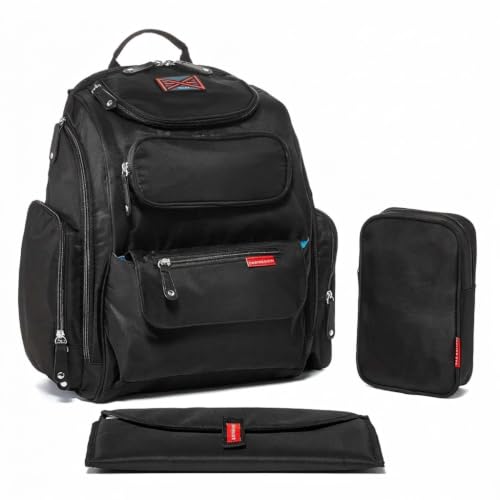
- Built for twins & 2 kids – Extra large capacity lets you pack everything both babies need for a full day out or extended travel, without sacrificing space for your own essentials. Finally, a diaper bag that actually fits your life.
- 14 pockets, everything in its place – Dedicated insulated bottle pocket, roomy main compartment, quick-access wipes pocket, and multiple external "mommy pockets" for keys, wallet, and phone. No more digging — everything is right where you need it.
- Hands-free & comfortable – Padded back panel and shoulder straps distribute weight evenly so you can carry a full load all day without strain. Wear it as a backpack or clip it to your stroller with the included durable stroller straps.
Paid link
What goes in it is a solved problem — see the diaper bag guide for the bag itself.
4. A stroller you are willing to have damaged
Gate-checking is convenient and it is not gentle. If you own an expensive travel system and a cheap umbrella fold, the trip is the reason you own the second one.
5. A travel crib, sometimes
Worth it for longer stays and where you cannot verify what the accommodation provides. Dead weight for two nights in a hotel that has a cot. See the travel crib guide.
What earns its space
Five pieces of kit, and whether to bring them
Carrier
Gives you both hands back through security, the terminal and the aisle.
Car seat
Must carry the aircraft certification wording. Check the label, not the listing.
Backpack diaper bag
A shoulder bag slides off while you fold a stroller one-handed.
Stroller
Gate-checking is convenient and not gentle. Take the one you can bear to lose.
Travel crib
Worth it for long stays; dead weight for two nights in a hotel with a cot.
What actually goes wrong, in order
- Security takes longer than you planned. Baby liquids get separate screening, the carrier may need to come off, the stroller gets swabbed. Budget extra time and the rest is manageable.
- You cannot carry it all. The commonest cause is the shoulder bag. Fix it before you leave.
- The bassinet you were counting on is not there. Because it was requested, not reserved.
- Nappy change with no changing table. Not all aircraft have one in every lavatory; ask the crew which one does.
- The baby is fine and you are exhausted. Which is the normal outcome, and worth expecting.
A note on where these rules come from
The car-seat approval and the lap-infant guidance are FAA. The liquid exemption is TSA, and applies at US airports — other countries have their own equivalents, usually similar in spirit. Bassinet policy, gate-check policy, and what a lap infant costs are the airline’s own, and they genuinely differ.
So: treat the federal rules as fixed, and confirm anything airline-specific directly with your carrier, ideally in writing, before you are relying on it at the gate.