As an Amazon Associate I earn from qualifying purchases. This post contains affiliate links. If you buy through them we may earn a commission at no extra cost to you.
Product prices and availability are accurate as of the date and time indicated and are subject to change. Any price and availability information displayed on Amazon at the time of purchase will apply to the purchase of this product. Certain content that appears on this site comes from Amazon. This content is provided "as is" and is subject to change or removal at any time.
An airplane bassinet — a carrycot that clips to the bulkhead wall in front of you — is the difference between holding a sleeping baby for nine hours and not. It is also the piece of the trip least within your control, and understanding why saves a lot of disappointment.
Before you book, run the free FAA car seat checker: boosters, vests, CARES and the seat width, straight from 14 CFR 121.311.
They are requested, not reserved
This is the whole thing. A bassinet is not an item you add to a booking like a seat or a meal. There are very few per aircraft, they attach only at bulkhead rows, and they are allocated by the airline — often not confirmed until check-in, sometimes not until you are aboard.
So the realistic approach is:
- Request it as early as possible, at booking, by phone if the website has no option.
- Reconfirm a few days out, and again at check-in.
- Ask for the bulkhead seat itself — no bulkhead, no bassinet, and the seat is the part you can sometimes secure.
- Have a plan for not getting one. Because you might not.
Requested, not reserved
How to actually get one
- 1At bookingRequest it as early as possible — by phone if the website offers no option.
- 2Secure the bulkhead seatNo bulkhead, no bassinet. The seat is the part you can sometimes actually hold.
- 3Reconfirm a few days outAllocation is the airline’s and is often not settled until late.
- 4Ask again at check-inAnd once more at the gate. This is normal, not pestering.
- 5Have a plan BBecause you may still not get one, and finding that out on board is the worst moment to start thinking about it.
The limits are real, and they are about length as much as weight
Airlines publish their own limits and they differ, but the shape is consistent: a bassinet suits a baby who cannot yet pull themselves up or sit unaided, with both a weight ceiling and a length ceiling.
Length is the one that surprises people — a long, light baby can outgrow a bassinet before reaching the weight limit. And a baby who can sit up will not be permitted to use one regardless of size, because the restraint is designed for a child lying down.
Check your airline’s published figures for your aircraft type. Two carriers on the same route can differ, and the same carrier can differ by aircraft.
The bulkhead row
What you gain, what you give up
✓ You gain
- Somewhere to put a sleeping baby down
- Floor space in front of you
- No seat reclining into your lap
- Usually first to be served
✕ You give up
- Under-seat storage — everything goes overhead for taxi, takeoff and landing
- Raising the armrests, which usually house the trays
- A little seat width, for the same reason
- Quiet — galley and lavatories are close
- Uninterrupted sleep: the baby comes out for every seatbelt sign
The catches nobody mentions
- You will be woken for turbulence. The baby comes out of the bassinet for any seatbelt sign. On a bumpy flight that can be most of it.
- Bulkhead armrests often do not raise, because the tray tables live in them. You cannot lie across two seats.
- Nowhere to put your bag. No seat in front means everything goes overhead for taxi, takeoff and landing.
- Screens and trays are fixed in the armrest, which narrows the seat slightly.
- Bulkhead is near the galley and lavatories. Light and noise, all night.
None of these outweigh having somewhere to put the baby down. They are worth knowing so the row does not feel like a downgrade when you get there.
Plan B
If you do not get one
A carrier
Lets you stand and walk the aisle without your arms full.
Paid seat + approved car seat
The only true “put them down” alternative, and the safer arrangement anyway.
Agreed shifts
Settle who takes which hours before boarding, not at 3am.
Book the bulkhead anyway
The floor space earns its keep with or without the cot.
Short-haul: usually not an option
Bassinets are essentially a long-haul, wide-body feature. On a two-hour domestic flight the answer is generally no, and the practical alternatives are a carrier, or a car seat in a seat you have paid for — which, per the FAA guidance on car seats, is the safer arrangement anyway.
If you do not get one
- A carrier, so you can stand and walk without arms full. The most useful fallback by a distance.
- A paid seat with an approved car seat, which is the only true “put them down” alternative.
- Swap shifts if there are two of you — agree it before boarding, not at 3am.
- Book the bulkhead anyway. The extra floor space is worth having even without the cot.
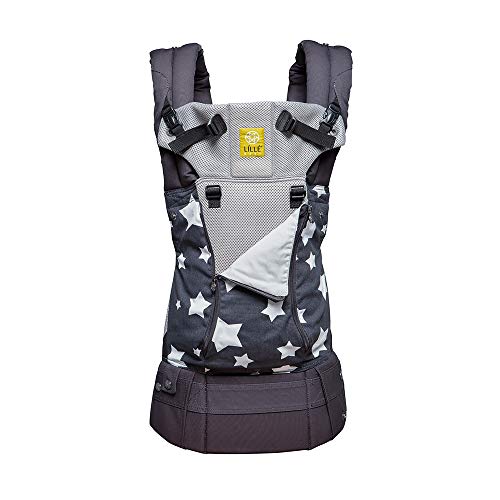
- Six Positions: The LÍLLÉbaby Complete baby carrier features 6 ergonomic carry styles for 360-degree babywearing including front, backpack and hip styles.
- Ready for All Seasons: Zip down front panel reveals breathable mesh for extra airflow on warm days.
- Newborn to Toddler: Transformational carrier seat can be folded small for newborns and infants and expanded to a wider setting as your child grows.
Paid link
Part of flying with a baby. For sleep at the destination rather than in the air, the travel crib guide is the relevant one.