
Most parents hear an age. Two years. Maybe three. A cousin flipped their kid at one and swears it was fine. Here’s the thing, though: the rule pediatricians actually use isn’t a birthday. It’s the limits printed on your car seat.
The short version goes like this, and I’d keep it somewhere you’ll see it. Keep your child rear-facing for as long as your seat allows, until they reach its highest rear-facing weight or height. Most convertible seats let kids ride rear-facing for 2 years or more. Below I’ll walk through how to find those two numbers, which “signs” don’t mean it’s time (feet touching the seat back is the big one), and what has to change on the day you finally turn the seat around.
The Rule: Rear-Facing Until the Seat Says Stop
Every baby rides rear-facing, starting with the first ride home from the hospital. From there, infants and toddlers alike stay rear-facing as long as possible, until they reach the highest weight or height the seat’s maker allows.
There’s no birthday in that rule. Age only hints at when a child might hit the limit. The limit itself is what decides, and it’s different on every seat. So I’d stop asking “how old?” and start asking “how close to the label?”
The Deciding Spec Is on the Seat’s Label

The deciding spec here is printed right on the seat, so you don’t need a guide to find it. Every seat has a rear-facing weight limit and a rear-facing height limit. You’ll find both on the label on its side or back, and again in the manual. My advice: snap a photo of that label so you’ve always got it on your phone. Your child is done rear-facing when they reach either one, whichever comes first.
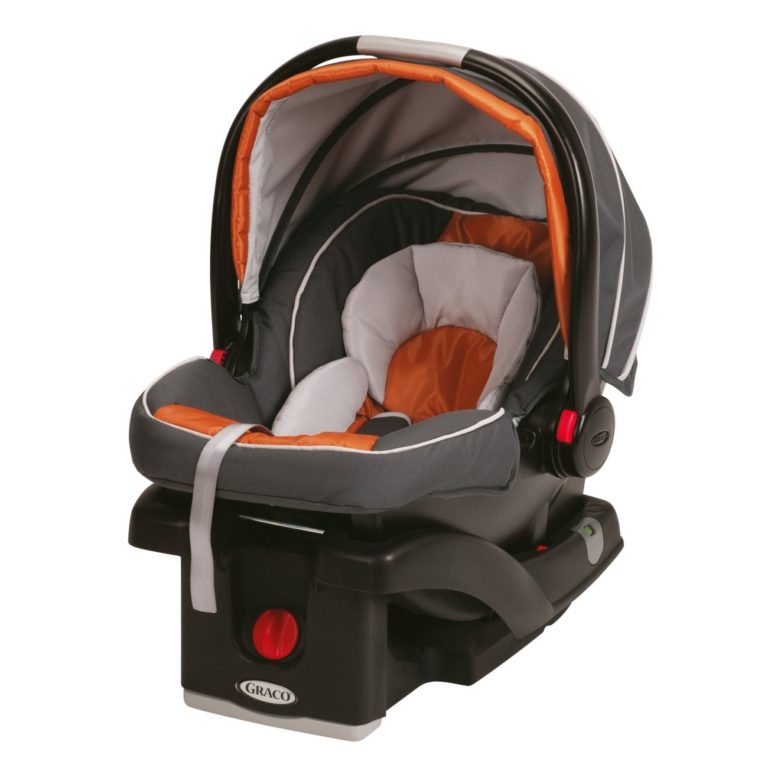
The numbers swing a lot by seat type. Rear-facing-only infant seats (the kind with a carry handle and a base that stays in the car) fit babies up to 22 to 35 pounds and 26 to 35 inches, depending on the model. Convertible and all-in-one seats often go much higher in rear-facing weight, up to 40 to 50 pounds, with higher height limits too.
Turns out height is the limit people miss. A tall, lean toddler can run out of height long before they run out of weight. Each seat’s manual explains how it wants height measured, so check it there rather than eyeballing it from the driver’s seat. Honestly, this is the one I’d double-check every few months.
Outgrowing the Infant Seat Isn’t the Switch
Here’s where a lot of families turn too early. When a baby reaches the weight or length limit of a rear-facing-only seat, the next step is a convertible or all-in-one seat, still installed rear-facing. Outgrowing the carrier means a bigger seat. Not a new direction.
That bigger seat comes with trade-offs. Convertible seats are bulkier and are made to stay in the car, with no carry handle and no separate base. All-in-ones are often bigger still, so it’s important to check that one fits your car while it’s rear-facing. In a compact car with a tall driver, a big all-in-one seat could be wrong for you even when its spec sheet looks great. Check both the car seat’s manual and your vehicle’s manual on whether the car seat is allowed to touch the back of the seat in front of it.
Who should skip an all-in-one? If your back seat is tight, I think a convertible is usually the easier fit. If you’ve got the room, an all-in-one seat saves you a later purchase, and that’s worth it.
Shopping for one now? Put the rear-facing height and weight limits at the top of your list, ahead of cup holders and fabric. A seat with high rear-facing limits keeps your child facing back longer without another purchase. Also check the date stamped on it, because seats expire; our guide to car seat expiration shows where to find it.
Feet Touching the Seat Back Isn’t a Reason to Turn
This is the worry that comes up most, and the answer is genuinely reassuring. Kids are very flexible and can always find a comfortable position in a rear-facing seat, even once their feet reach the vehicle seat. Leg injuries are very rare for children riding rear-facing.
Bent knees look cramped to an adult. To a two-year-old, it’s just how they sit (often cross-legged, or with their feet propped up on the seat back).
A few other things don’t count as signals either. Your child’s age on its own doesn’t. Neither does a friend’s kid who already faces forward, or a toddler who’d rather see the road. None of those change the numbers on the label. And the label is pretty much the whole rule.
What Changes on the Day You Turn It Around

Once your child passes the rear-facing weight or height limit of a convertible seat, they move to forward-facing with a harness. Then they stay in a harness as long as possible, up to that seat’s forward-facing limits. Pediatricians’ advice is a harness until at least 4 years old. If your child outgrows a harnessed seat before 4, look for one rated for higher weights and heights. Combination seats, which start with a harness and later turn into a booster, often have harness limits of 40 to 65 pounds.
Turning a convertible seat takes a bit more than spinning it around. Four things change:
- Move the shoulder straps to the slots at or just above your child’s shoulders. Rear-facing, they sat at or below.
- Adjust the recline so the seat sits more upright, if the manual calls for it.
- Route the seat belt or the lower anchor straps through the forward-facing belt path, and make sure the belt is locked.
- Use the top tether every time. It goes on a forward-facing seat whether you install with the seat belt or the lower anchors.
That top tether is the step that gets skipped most, since it’s easy to leave the strap tucked in the seat’s back. I’d find your car’s tether anchor in the vehicle manual before turn day, so you’re not hunting for it in a parking lot. In a sedan it’s usually on the panel behind the back seat. In other vehicles it can be on the back of the seat, the ceiling or the floor.
The Install Checks That Apply Either Way

Whichever way your child faces, the same quick checks apply. I’d do this every time you reinstall. Grab the seat at the belt path: if it moves more than 1 inch side to side or front to back, it isn’t tight enough. The harness should be snug enough that you can’t pinch any slack between your fingers at the shoulder. The chest clip goes at the center of the chest, even with the armpits.
The seat belt and the lower anchors are equally safe, so use one or the other, whichever fits your seat and your car best. Not both at once, though, unless the car seat’s maker and your car’s maker say that’s OK. Lower anchors also have a weight limit. They’re rated for a maximum of 65 pounds, and that’s the seat plus your child, so check the seat’s label for the highest child weight it allows on the anchors. Past that, you switch to the seat belt.
Where the seat goes matters too. The back seat is the safest place for every child under 13. The middle of the back seat may be best if you can get the seat tight there, but many cars have no lower anchors in the middle, and a narrow or uneven cushion can make it hard. A side spot where the seat installs tightly beats a wobbly middle one. And never put a rear-facing seat in the front seat of a car with an active front passenger airbag. If that airbag goes off, it hits the back of the car seat, right against your child’s head.
Winter coats wreck the pinch test, because bulky clothing compresses in a crash and leaves the straps too loose. Our guide to puffy coats and car seats covers what to put on instead. If anything about the install feels off, a certified child passenger safety technician (CPST) can check it with you. That’s worth it before a long trip.
Why the Rules Are This Strict
Car seats work, and I don’t think the numbers are close. Child safety seats of every kind, facing either way, cut the risk of fatal injury by 71% for infants under 1 and by 54% for toddlers aged 1 to 4 in passenger cars. In light trucks, the drops are 58% and 59%.
That’s why I’d sweat every detail above. A seat only delivers that protection when it fits the child in it and sits tight in the car.
Six months in, recheck the label against your child’s height and weight. Toddlers grow fast, and the limit sneaks up.
Not sure which stage your child is in right now? Our car seat requirements checker walks through it, and if you’re borrowing a seat on a trip, our notes on rental car seats cover what to look for. For anything about your child’s health, size or a special need, ask your pediatrician, who knows your child far better than any website.