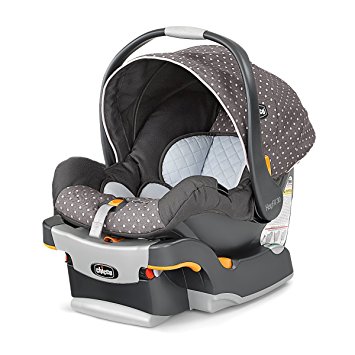

I’m Matt, and the thing is, nobody mentions this at the baby shower: your car seat has a use-by date. It’s printed on the seat itself. It usually lands somewhere between 6 and 10 years after the seat was made. And it has nothing to do with the day you bought it. A seat that sat in a warehouse for a year started its clock in that warehouse.
Makers don’t all give their seats the same life, so your seat’s own label and manual always win over any general rule. And if you’d like someone to check the seat and how it’s installed, a certified child passenger safety technician (CPST) can do that in person.
Why a Car Seat Has a Date at All

It sounds like a sales trick. It isn’t, or at least the makers’ stated reasons aren’t. Britax’s expiration FAQ gives two. First, “Materials such as plastics and foams can degrade beyond the expiration timeframe.” Second, “safety standards and technologies evolve, meaning an older seat may not provide the same level of protection as a newer model.”
Chicco’s explainer adds the everyday stuff: “straps that stretch and loosen,” and “the sun can cause weathering and deterioration of plastics.” That’s what actually breaks on a car seat over the years. Not a dramatic snap, just a slow wear-down of the parts that hold your kid in place during a crash. Think about where the seat lives. A parked car in July, then a parked car in January, for years.
Chicco is also honest that there’s no single number for every seat. In its words, “there’s no universally accepted car seat lifespan.” Many seats fall somewhere in the five-to-ten-year range, Chicco says, but each maker sets its own date. Turns out that’s exactly why you can’t go by a general rule. You go by the seat.
Where the Date Hides on Your Seat

The deciding spec here is the date of manufacture (DOM), not the receipt. Every seat has a label with it. The American Academy of Pediatrics (AAP) car seat guide for families says to look there first. Then you “check with the manufacturer to find out how long it recommends using the seat.”
Where the label sits depends on the brand:
- Britax: on the serial label. Many models made after 2018 print the expiration date right on that label too. If yours only shows the DOM, Britax says to check the Warnings section of the user guide for the lifespan.
- Chicco: on the underside of the seat or on the base, per its durability guide, with the model’s details in the manual.
- Evenflo: on a label on the product, “along with the model name, model number and date of manufacture.”
Two quick habits help. I’d snap a phone photo of the label the day the seat comes home (it takes ten seconds). And I’d put the expiration date in your calendar. You won’t remember it six months in, let alone six years.
How Long Britax, Chicco and Evenflo Seats Last

Here’s what the three makers publish. Britax says its seats generally expire 6 to 10 years from the DOM, depending on the model. Chicco gives the same 6 to 10 years, depending on the seat type and model. Evenflo’s line is the simplest: “all of our car seats and booster seats now have a 10 year expiration from the date of manufacture.” But there’s a catch for older Evenflo seats: one made before January 2025 “may have a different expiration date. Follow the date on the seat you own.”
Britax goes a bit further and lists it by model in its expiration guide. Infant seats and their bases get the shortest life:
- Willow, Willow S, Willow SC and Cypress infant seats: 6 years.
- Aspen and Alpine bases: 6 years.
- Grow With You, including the ClickTight versions: 9 years.
- Poplar and Galaxy360, plus One4Life: 10 years.
- The Highpoint and Skyline boosters, plus UpNGo: 10 years.
And the industry-wide range is wider than any one brand. Evenflo’s parent guide puts it at anywhere from 4 years up to 10 or 12 years, across makers. So if you’re shopping for a second kid, the date matters as much as the price. A 10-year convertible can carry one child into booster age with room to spare; a 6-year infant seat may not stretch to a sibling born four years later. Honestly, I’d treat the lifespan as a line on the spec sheet, right next to the weight limits.
The December 5, 2026 Rule Change

This one’s about new seats, not yours, but it explains the “standards evolve” reason in real life. U.S. car seats are built to a federal standard called FMVSS 213, which dates to the 1970s and covers frontal crashes. In June 2022, NHTSA set a new side-impact standard, FMVSS 213a. Then in December 2023 it set FMVSS 213b, an updated version of the frontal standard.
The side-impact rule was supposed to kick in on June 30, 2025. A final rule in the Federal Register moved that compliance date to December 5, 2026. The mandatory date for 213b is the same day. In plain terms: seats made from that date on have to meet the newer tests.
To be clear, the date on the seat you own doesn’t move because of this. The rule sets what new seats must pass, and your seat’s date still comes from its maker. What it does mean is that a seat made today could be “older standards” long before its expiration date. That’s the exact reason Britax gives for dates in the first place.
When a Seat Is Done Before Its Date

An expiration date is the latest a seat can be used. It isn’t a promise the seat lasts that long. The AAP’s list says never use a seat that:
- Is too old (past the maker’s date).
- Has any visible cracks.
- Has no label with the date of manufacture and model number. Without those you can’t check for recalls. The AAP also warns a missing label can be a sign of a counterfeit seat.
- Doesn’t come with instructions, or is missing parts.
- Was recalled. You can check with the maker or NHTSA’s Vehicle Safety Hotline at 888-327-4236.
After a crash, the AAP and some makers give different rules. Per the AAP, a seat from a moderate or severe crash is done. NHTSA calls a crash minor only if all five of these are true:
- The car could be driven away.
- The door closest to the car seat wasn’t damaged.
- No one in the car was injured.
- The airbags didn’t go off.
- You can’t see any damage to the seat.
After a minor crash, the AAP says, a seat “may still be safe to use.”
But some makers are stricter. Chicco says plainly that it recommends “never using a car seat that has been involved in any car crash, including minor ones,” because of damage you can’t see. Chicco also says new replacement parts can’t extend the date. They don’t make a crashed seat fine to reuse, either. When NHTSA and your maker differ, follow the maker. It’s their seat and their manual. Even the AAP notes that “some car safety seat manufacturers recommend replacing the seat after any crash.”
Used and Hand-Me-Down Seats: Who Should Skip Them

The AAP’s line on used seats is short: “Avoid used car seats if you don’t know the seat’s history.” To me, that’s the whole test. Think of a seat from your sister. She can tell you it’s never been in a crash, and she hands you the manual. That’s pretty much the opposite of a seat at a yard sale.
So who should skip it? Anyone buying from a stranger, an online listing or a thrift store. You can read the date off the label, sure. But you can’t read whether it rode through a fender bender last spring, and the date alone doesn’t tell you that. I’ll be blunt: if the label’s gone, it’s an easy no.
If you do take a hand-me-down from someone you trust, run the AAP list above, check the date, look up recalls, and make sure every part is there. Then count the years left. A seat with three years left only works if three years is all you need from it.
Retiring an Expired Seat So Nobody Else Uses It

Here’s the part people skip: don’t just leave it on the curb. An intact seat at the curb looks fine to the next person, and they’ll have no idea it’s expired. All three makers say the same thing in slightly different words. Make it unusable first.
- Britax: cut the harness, remove the cover, then recycle the plastic shell if possible.
- Chicco: remove the harness straps and seat cover. Write “DO NOT USE – EXPIRED” in permanent marker on the frame. Wrap it in a black plastic garbage bag, then follow your local rules.
- Evenflo: cut the harness straps and mark the seat “EXPIRED — DO NOT USE.”
It takes five minutes and a pair of scissors. I think it’s the cheapest safety step in this whole post, and it’s worth it.
Trade-In Events and Recycling

A car seat is plastic and steel under a fabric cover, which is why the makers say to strip it first and recycle the shell where you can. Britax and Chicco both point to local programs. Some communities run car seat recycling. Chicco also suggests checking whether “big-box retailers in your area have car seat trade-in or recycling programs.”
The best-known one is Target’s. This fall’s event ran September 20 through October 3. KCTV reported that Target took “any car seat” (bases and boosters too), even ones that are “damaged or expired.” The reward was a 20% Target Circle bonus on new baby gear. Target said its partners turn the material into things like pallets, plastic buckets and construction materials. That window has closed, so if your seat expires before the next one is announced, the cut-and-mark steps above come first.
My view on waiting for a trade-in: only if you were going to buy at Target anyway. Think per use, not per box. A 20% bonus is nice on a seat you’ll use for a decade. It’s not a reason to keep an expired seat in the car one more month.
Register the Seat the Day It Comes Home

One last habit, and it’s the one I’d push hardest. The AAP says to “fill out and mail in the registration card that comes with the car safety seat,” or register on the maker’s website. It’s how the maker reaches you if your seat is recalled. A recall notice that goes nowhere is wrong for you and your kid in a way no spec can fix.
So when the box arrives: register it, photograph the label, put the expiration date in your calendar. Traveling soon? The guides on rental car seats and taking a car seat on a plane cover the next questions. The puffy coats guide covers the winter one. For your state’s rules on seat types by age, there’s the car seat requirements checker. Any question about your own child’s fit or health goes to your pediatrician.