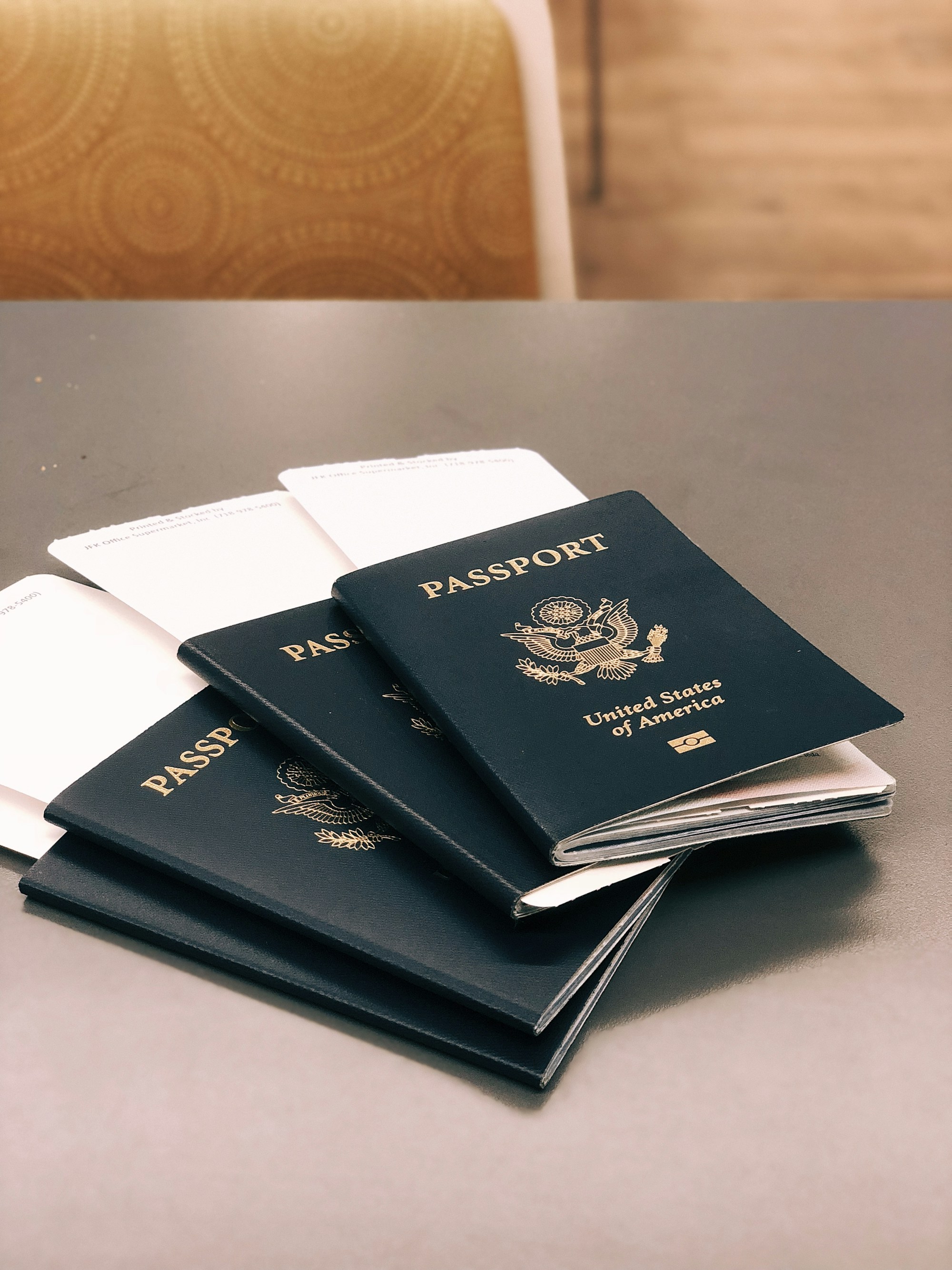

A baby’s first passport is one of those errands that looks simple until you’re standing at the counter. It isn’t hard — it’s just strict, and none of the rules bend for a newborn who can’t sit up for a photo. Both parents usually have to be there (more on the exceptions below). The form has to be printed a certain way, and the photo has a rule list of its own. Miss one and the application goes on hold while your trip date keeps getting closer.
Below is the whole process in order, with what it costs and how long it takes as of November 2026. If you’re still deciding whether to take the trip at all, our guide to flying with a baby covers the flight itself. This one is only about the paperwork, and it’s written for the parent who wants to get it right on the first visit.
Does a Baby Need Its Own Passport?

Yes. There’s no family passport, and there’s no infant exception for flying abroad. The rules for a child under 16 start on the day a baby is born, and the photo rules even have a section just for babies. A lap baby doesn’t get a seat on the plane, but it still needs its own passport for an international flight.
So the real question isn’t whether to get one. It’s when to start. A baby can apply once you have the birth certificate on paper, and that’s the piece to order first. A phone photo or a digital copy won’t work, because the passport office takes physical proof of citizenship only.
Two more facts shape the plan. A passport for a child under 16 is good for 5 years. And you can’t renew a child’s passport by mail. Every new one means a new application, in person, with the child there.
Whether your baby is ready to fly is a separate call, and that one belongs to your pediatrician. The paperwork steps are the same for a 3-week-old as for a 3-year-old.
Every Child Applies in Person, Every Time

A child’s passport always goes through Form DS-11, in person, at an authorized passport acceptance facility. Find one near you and check whether it takes appointments, since some do and some don’t. There are also passport fairs, and some of them run in the evening or on a weekend, which helps if both parents work.
The form itself has three rules that send people home.
- Fill it out with the online form filler, then print it single-sided. A double-sided printout is refused.
- Don’t sign it at home, even if it feels like you’re saving time. You sign only when the acceptance agent asks you to, after the oath.
- Don’t staple or tape the photo to the form. The agent checks it and staples it for you.
Then bring the documents.
- Proof of citizenship. For most babies that’s the U.S. birth certificate, the original with its seal or stamp, plus a photocopy.
- Proof that you’re the parents. A U.S. birth certificate that lists you covers this too. If yours doesn’t, bring something that does, like an adoption decree or a court order.
- A physical photo ID for each parent, such as a valid driver’s license, plus a photocopy of the front and back.
What actually breaks at this step is small stuff. A form signed in the car on the way over has to be redone. So does a birth certificate copy you brought on your phone instead of on paper. Pack the folder the night before. Then check it against this list one more time, because the counter is a bad place to find out.
Both Parents, or a Notarized Form DS-3053

This is the rule that surprises people. For a child under 16, both parents or guardians have to come to the appointment with the child. One parent showing up with the baby and a good explanation isn’t enough.
If one parent can’t come, that parent fills out Form DS-3053, a Statement of Consent, and signs it in front of a notary. The details that trip people up are below.
- It has to be turned in within 90 days of the day it was signed or notarized. A form notarized in July won’t help with a November appointment.
- An electronically notarized form is accepted where state law allows it, but you still bring a printed copy.
- Bring a photocopy of the front and back of the ID that parent showed the notary.
If you have sole legal custody, you bring proof of it instead. That can be a court order granting you sole custody, or a certified birth certificate that lists you as the only parent. If the other parent can’t be reached at all, there’s Form DS-5525, a Statement of Special Family Circumstances, and the passport office may ask for more evidence such as a custody order. A parent deployed with the military should usually still send a notarized DS-3053.
One more tool is worth knowing about if custody is a worry. The Children’s Passport Issuance Alert Program, or CPIAP, is free. It lets a parent or guardian get an alert when someone applies for a U.S. passport for their child. If you share custody and you’d want to know about an application you didn’t agree to, sign up before anyone needs it.
The Baby Photo Is Where Applications Stall

Unacceptable photos are the number one reason passport applications go on hold. A baby’s photo is harder to get right than an adult’s, so this is the step to slow down on. These are the photo rules that matter for a baby.
- The photo is 2 x 2 inches, in color, and taken in the last 6 months.
- The head, from the bottom of the chin to the top, measures between 1 and 1 3/8 inches.
- The background is plain white or off-white, with no shadows, texture or objects.
- No other person can be in the photo.
- The baby faces the camera with a neutral look and the full face showing.
- It’s the original, unedited photo, with no filters.
The setup that works is a plain white sheet. Lay your baby on it, or cover a car seat with the sheet and set the baby in the seat. The car seat holds the baby upright, so nobody’s hand or arm ends up in the frame. Set it up near a big window if you can. Soft daylight is kinder than a ceiling light, which can cast a shadow across a small face, and the photo can’t have any shadow on the child’s face. I’d take a dozen shots in a row and keep the one with the flattest light.
And here’s the rule that saves new parents the most stress. A baby’s eyes don’t have to be fully open (a real relief with a sleepy newborn). Older children’s eyes do, but a newborn with heavy lids is fine.
You can get the photo taken at an acceptance facility when you apply, at any company that offers photo services, or by a friend or family member. Prices vary from place to place, so ask before you sit down.
What a Baby’s Passport Costs

You pay two separate fees at the appointment. The application fee goes to the U.S. Department of State. The acceptance fee goes to the facility that takes your application.
Here’s what a child under 16 pays, as listed for November 2026.
- Passport book. A $100 application fee, plus the $35 acceptance fee.
- Passport card. A $15 application fee, plus the $35 acceptance fee.
- Both together. A $115 application fee, plus the $35 acceptance fee.
So a book on its own comes to $135 all in. Adding a card to the same application only adds $15, because you pay the $35 acceptance fee once.
Two extras can raise the bill. Expedited service costs $60 more. If you want the finished passport delivered in 1 to 3 days after it’s mailed, add $26.87.
Pay the application fee by check or money order made out to “U.S. Department of State,” with the child’s name and date of birth in the memo line. A separate check for each child is preferred, though one check for a family applying together is accepted if you list every child in the memo. The acceptance fee is paid to the facility in whatever way it takes.
How Long It Takes, and When to Pay for Speed

As of November 2026, processing takes 4 to 6 weeks for routine service and 2 to 3 weeks for expedited service. Those times don’t count the mail. It can take 2 weeks for an application to reach the passport office, and another 2 weeks for the new passport to arrive at your door.
Add it up and a routine application can take around 10 weeks from the counter to your mailbox. I’d start at least 3 months before an international trip. If the baby isn’t born yet, start the birth certificate order the week you get home from the hospital.
If you’re flying abroad in less than 3 weeks, the normal route won’t make it. Make an appointment at a passport agency or center once you’re within 14 days of the trip.
The $60 expedite fee is worth it for some families and wasted money for others. Who should skip it? Anyone whose trip is more than 3 months out. Routine service plus both mail legs still fits with room to spare. Who should pay it? Anyone booking inside about 10 weeks, or anyone whose trip can’t move.
You can watch it along the way. Status updates come by email, and passportstatus.state.gov shows when the passport should arrive.
Book or Card? The Card Is Wrong for You If You’re Flying

You can apply for a passport book, a passport card, or both. The card is cheaper and fits in a wallet, and that’s exactly where families go wrong. A passport card is valid only at land and sea crossings between the United States and Mexico, Canada, the Caribbean and Bermuda. It can’t get your baby onto a flight to another country.
For a baby, the card makes even less sense than it does for a grown-up. A U.S. citizen under 16 coming back into the country by land or sea from Canada or Mexico can show a birth certificate instead, and even a copy works. So a family that only drives across the border may not need a card for the baby at all. Check what Canada or Mexico asks for on the way in, since their entry rules are their own.
Who is the card for, then? Mostly a family that crosses by car or ship often and wants one small ID for every trip. Even then, honestly, the book covers the same crossings.
It comes down to one question. Will this child get on a plane to another country in the next 5 years? If yes, get the book. If you want the card too, it’s $15 more on the same application. For most families I’d get the book alone and skip the card until there’s a real road trip on the calendar.
Once the passport is in the mail, the rest of the planning is about the flight. Our guides to using a car seat on a plane and airplane bassinets cover the next two questions most parents have. And holiday travel with a baby has the busy-season tips, if your first trip lands in December.